Table of Content
Duct tape is one of the best ways to seal the seams of your foamed polystyrene foam insulation. This strong, durable tape will create a tight seal that will prevent any air or moisture from leaking through. Plus, duct tape is easy to apply and remove, so you can easily seal any gaps or cracks in your insulation.
Again, if not, I’m sorry and use Crystal’s advice and call around. Insulating your mobile home with foam is proven to be effective. The foam is easy to use and fairly affordable for its high R-value and energy conservation properties. Expanded polystyrene is the most common type of foam insulation and the most affordable.
Commonly Used Types Of Insulation Used Under Mobile Homes
A good rule of thumb is to add 10 percent to your total square footage to be safe. So, in our example, you would need to add 12 square feet to your calculation, giving you a grand total of 132 square feet (or 0.33 square meters) of insulation. A vapor barrier is a material that does not allow water vapor to pass through it. This can help to prevent moisture from getting into your insulation and causing it to break down over time.
This might just be the easiest type of insulation you can install by yourself. All you need is an opening to the area you want to insulate, and it’s as easy as filling it up with as many polystyrene beads as is necessary. In this article, we want to give you some tips to clarify the world of mobile home insulation for you. We’ll take a look at all the areas in your mobile home that can be insulated, common insulation problems, and the materials that are available for mobile home insulation. Proper insulation is even more important in mobile homes because manufacturers make them with very poor insulation. The materials used for mobile homes are thin and don’t offer too much thermal protection.
Mobile Home Belly and Floor
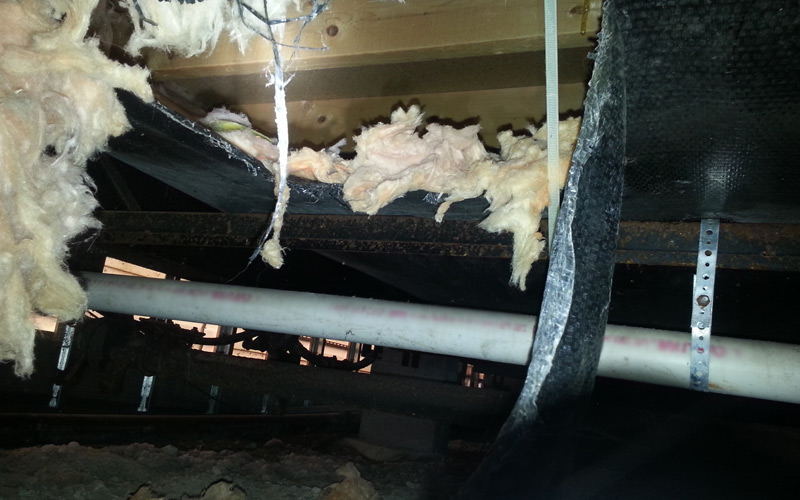
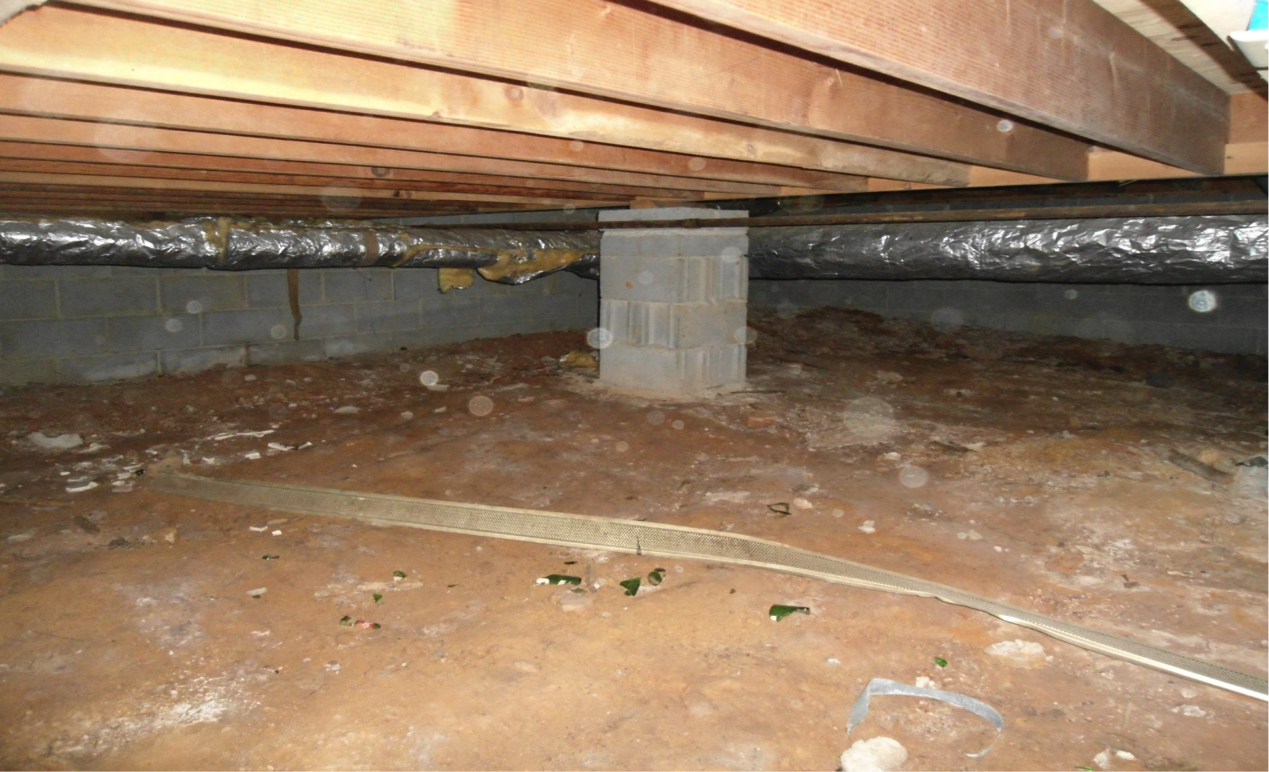
Some of them work better than others, and some are more appropriate for certain parts of the home only. When it comes to the underbelly of a mobile home, experts suggest it is best to use closed-cell spray foam insulation. Using fiberglass and cellulose can be effective, but these materials soak up any water in the ground.

Homeowners tend to install rolled or batt fiberglass insulation inside out, thus reducing its energy-efficiency drastically. R-Value comes up frequently when talking about mobile home insulation, but what exactly is it? The ease or complexity of installation, price, and the R-Value you receive for your money and work should all be taken into account when selecting the best insulation.
About MobileHomeLife.org
Batts and rolled insulation can easily fit between mobile home floor joists but both require a ton of cuts. These cuts and the complex installation can damage the insulation which will reduce its efficiency. Blown-in insulation may sometimes be used in walls; however it is a more difficult process, particularly for older units built before 1976 when wall studs measured only 2"x2". The roof or attic insulation may also be blown through holes cut in the roof or by pulling the trim off the edges of the roof and sliding a hose through. The floor or underbelly of the mobile home may also be accessed by pulling off bottom trim pieces and filling the factory-installed membrane that covers the plumbing.
When changing the windows of your mobile home, it is important to properly measure them out and get the exact size as... Blown away – Any amount of wind entering the attic through vents or gaps can blow the very light insulation away. Chases running down the walls – These fixtures are common at chimneys and so on but pose a significant conundrum when it comes to insulation.
Mobile Home Siding and Walls
For Realhomes.com, Sarah reviews coffee machines and vacuum cleaners, taking them through their paces at home to give us an honest, real life review and comparison of every model. This material is similar to concrete but doesn’t contain cement, consisting instead of lime and aggregate, and so provides a floor slab that is vapor permeable. Insulating from above is more complex and will mean lifting floorboards. This has to be done carefully and, even then, is likely to result in damage, so isn’t an option if the floor is valuable aesthetically or historically. The best way to insulate existing flooring – and the best insulation for under it – will depend on its type. Floors are constructed in two ways, either suspended or solid.
Not many except that you need to be able to access the areas you want to insulate. Even though storm windows are also energy-efficient, vinyl windows perform a better job. This is the best approach if you’re remodeling your mobile home.
The results of the couple’s DIY insulation project has been a great success! Laurel states that the ‘dead zone’ is long gone and since the foam has insulated the duct-work under the home the forced air heat is reaching the end rooms better. During their first winter in the home, they learned how much their utilities cost and where all the cold spots were located in the home. Needless to say, their 1972 mobile home had a few cold spots and their heating costs were too high for such a small home.
There are no “middle-roads.” Any insulation job should be done properly. Roofs or attics with little obstruction from batts or beams. Your choice in R-value depends on your type of roof, floor, and location, but you should aim for at least R30-50 in your roof and R15-30 in the floor. The link above has a complete table detailing how to calculate your R-values.
Open-cell spray foam will react similarly and is better suited to walls as we mentioned above. With foam board insulation, as in your January 17, 2016 article, and using a 6 mil ground cover under the home, do you need a separate belly wrap? My wife and I will be replacing much of the subflooring in the 14 x 48 singlewide we’re buying in WV, and figure we can do a lot of the work from above.





No comments:
Post a Comment