Table Of Content
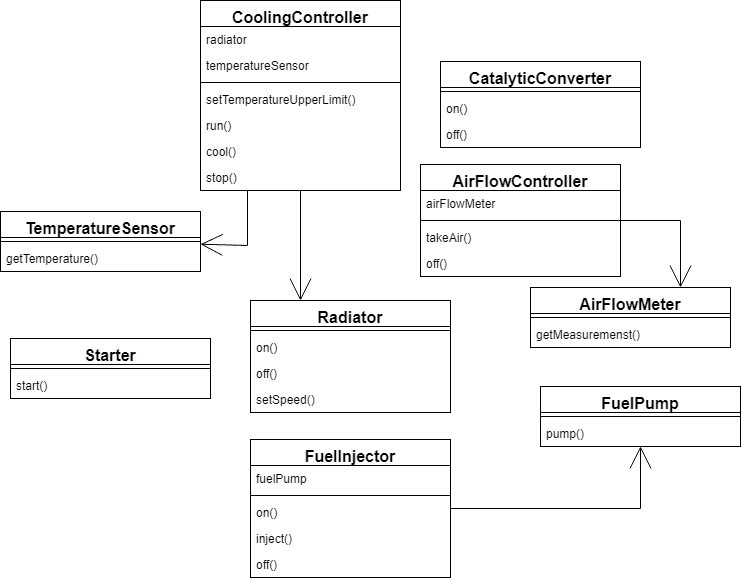
This pattern involves a single class which provides simplified methods required by client and delegates calls to methods of existing system classes. Facade Method Design Pattern provides a unified interface to a set of interfaces in a subsystem. Facade defines a high-level interface that makes the subsystem easier to use.
Structural code in C#
Facade defines a higher-level interface that makes the subsystem easier to use. Overusing facades can lead to a tangled mess of facade classes that obfuscate the system’s structure rather than simplifying it. Facades should only be used to simplify complex systems or provide a specific, simplified view of a subsystem. The properties of the facade design make it an interesting pattern for several application scenarios. Above all, there is the desire for a uniform interface to access complex sub-systems or any number of objects. That’s why the use of the facade pattern strategy should play a major role when planning a project.
Facade Pattern and Microservices
Integrating interactive kinetic façade design with colored glass to improve daylight performance based on occupants ... - ScienceDirect.com
Integrating interactive kinetic façade design with colored glass to improve daylight performance based on occupants ....
Posted: Mon, 27 Apr 2020 18:27:04 GMT [source]
A Facade shields the user from the complex details of the system and provides them with a simplified view of it which is easy to use. It also decouples the code that uses the system from the details of the subsystems, making it easier to modify the system later. The Facade design pattern simplifies the interface to a complex system; because it is usually composed of all the classes which make up the subsystems of the complex system.
Increased Complexity of the Facade:
This class has one method that will create subclass objects and call the respective methods in a particular order to place an order. The following class provides a simple interface for the client to place an order. Now, the client will create an instance of the following Order class and needs to call the PlaceOrder method to place an order.
Client Interaction:
Clients need to interact with multiple services implemented by subsystem classes. Due to their multiple interactions, there can be a lack of encapsulation of the internal structure of the subsystems. The Facade pattern, when implemented correctly, has the power to simplify complex systems and improve code readability and maintainability. As we’ve seen in this article, it can be adapted to different systems — from monolithic architectures to microservices, from legacy systems to modern concurrent and distributed systems. With its inherent flexibility and the power of Java, the Facade pattern stands as a formidable tool in a developer’s toolkit. In this example, a universally applicable interface “Shape” is to be defined for objects that represent a geometric form.
So, here, the extra class Order is nothing but the Facade class, which will be responsible for placing the order. This class internally creates the instance of the respective classes and calls the methods in a particular order. Now, the Client will not call the respective classes and their methods to place the order; instead, the Client will call the Order Class, PlaceOrder to method to place an order. The PlaceOrder method will internally use the Product, Payment, and Invoice classes to place the order. In this article, you will learn about the Facade pattern and see how you can apply it in real-world scenarios.
Problem Statement for the Facade Method Design Pattern
The subsystem Code works as an functionality any class, from the above example we will make the AudioPlayer, VideoPlayer , and ImageLoader as an class. But the user is not able to see what is happening behind the User Interface. For instance, an eCommerce platform might have separate microservices for user management, product management, and order management. A ECommerceFacade can simplify the interaction between these microservices.
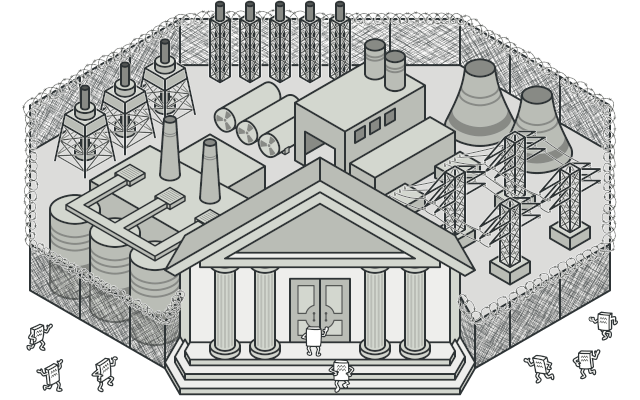
This is a pizza provider class which will get pizza for their clients. Here methods can have other private methods which client is not bothered about. The people walking outside the building can only see the walls and glass of the Building. The People do not know anything about the wiring, the pipes, the interiors, and other complexities inside the building. That means the Facade hides all the complexities of the building and displays a friendly face to people walking outside the building. The Mediator pattern is similar to the Facade as it combines different existing functionality to create a new one.
Use Cases of Facade Method Design Pattern
The advantages outweigh the disadvantages in some cases, but alternative design patterns or approaches might be more suitable in others. A decorator makes it possible to add or alter behavior of an interface at run-time. Use the Facade pattern when you need to have a limited but straightforward interface to a complex subsystem. As a result, the business logic of your classes would become tightly coupled to the implementation details of 3rd-party classes, making it hard to comprehend and maintain.
However, it includes only those features that clients care about. When you call a shop to place a phone order, an operator is your facade to all services and departments of the shop. The operator provides you with a simple voice interface to the ordering system, payment gateways, and various delivery services.
So, to place the order, the Client needs to do the above-mentioned steps in a particular order. The main difference between the Factory Method and Facade patterns is that the Factory Method creates a new object. In contrast, the Facade pattern provides a simplified interface to an existing object. To illustrate how to use the Facade pattern, let’s take a real-world example of a restaurant. First, you can call the restaurant and order a burger or other food.
In other words, Facade Pattern describes a higher-level interface that makes the sub-system easier to use. The .NET optimized code demonstrates the same code as above but uses more modern C# and .NET features. While Facade decreases the overall complexity of the application, it also helps to move unwanted dependencies to one place. It is basically single window clearance system.You assign any work it will delegate to particular method in another class. Using ReportGeneratorFacade, we will hide all these steps and expose easy to use methods. In programming, we nearly always have to work with multiple components at once and make them work together.




No comments:
Post a Comment